Online vs campus nursing programs New York: this comparison explains how each format affects classes, clinical training, costs, and licensure. Both routes can prepare students for nursing practice, but the right choice depends on scheduling needs and learning habits.
Online vs Campus Nursing Programs New York Students Can Choose
New York colleges offer nursing education through campus, online, and hybrid formats. Available options include practical nursing certificates, associate degrees, bachelor’s degrees, and graduate programs.
Prelicensure programs rarely operate fully online. Students may take lectures online, but they complete skills labs and clinical rotations in person.
How Online Nursing Programs Work
Online programs deliver most academic coursework through a learning platform. Students watch lectures, join discussions, submit assignments, and communicate with instructors from home.
Some courses follow a fixed weekly schedule. Others let students review lessons within set deadlines, which can help nurses who work rotating shifts.
Online study still requires regular participation. Students must manage assignments, exams, group projects, and clinical hours without daily classroom reminders.
How Campus Nursing Programs Work
Campus programs hold lectures and labs at scheduled times. Students receive face-to-face instruction and can ask questions during class.
This structure often suits learners who prefer direct feedback and a predictable routine. It also creates more opportunities to study with classmates before exams or lab assessments.
Travel creates an added commitment. Commuting, parking, and fixed class times may complicate work or family schedules.
Comparing Coursework and Clinical Training
Online and campus programs usually cover the same core subjects at a given degree level. Common courses include anatomy, physiology, pharmacology, microbiology, health assessment, and nursing practice.
The delivery method changes, but academic expectations remain similar. Students in either format must demonstrate clinical judgment, safe medication practices, and effective patient communication.
Skills Labs
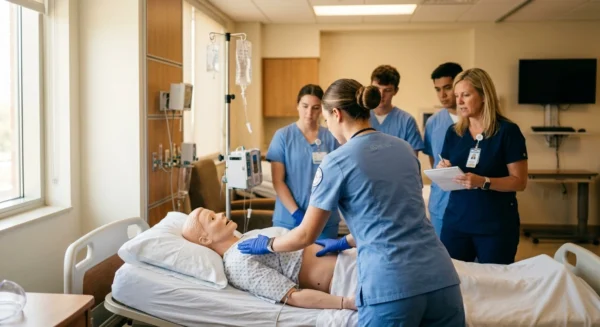
Skills labs give students supervised practice with equipment and patient-care procedures. Learners may work with simulation mannequins before performing those tasks in a clinical setting.
Campus students usually attend labs at their primary school location. Online students may travel to the college or an approved regional site for intensive lab sessions.
Clinical Placements
Every prelicensure nursing student needs direct clinical experience. Schools arrange or approve placements in hospitals, clinics, long-term care facilities, and community health settings.
Ask each school who secures clinical sites. Some programs coordinate placements, while others expect students to identify possible locations for school approval.
Placement availability can affect graduation timelines. This issue matters in areas where many nursing schools compete for the same clinical sites.
Licensure and Program Approval in New York
The New York State Education Department oversees nursing education and professional licensure in the state. Prospective students should confirm that a program meets New York’s educational requirements before enrolling.
Graduates seeking RN or LPN licensure must also meet current state requirements and pass the appropriate NCLEX examination. NYSED publishes application instructions, fees, and required training information on its website.
State Approval and Accreditation
State approval and programmatic accreditation serve different purposes. New York approval addresses state education requirements, while nursing accreditors review program quality against national standards.
Common nursing accreditors include the Accreditation Commission for Education in Nursing and the Commission on Collegiate Nursing Education. Accreditation can affect graduate school admission, credit transfer, and some employer decisions.
Confirm both the school’s institutional accreditation and the nursing program’s status. Use official school, NYSED, and accreditor databases rather than relying on advertising language.
Out-of-State Online Schools
An out-of-state college may offer online coursework to New York residents. However, that availability does not automatically confirm eligibility for New York licensure.
Ask the school whether its curriculum satisfies New York requirements. Also confirm that the program can support clinical placements in your location.
Cost Differences Between Online and Campus Programs
Tuition varies by school, degree, residency status, and program type. Public colleges may charge lower rates to New York residents, while private schools often use one tuition rate.
Online study can reduce transportation and relocation expenses. However, students may still pay technology, laboratory, testing, background-check, and clinical compliance fees.
Campus programs create different costs. Students should budget for commuting, parking, meals, housing, and time away from work.
Compare the Full Attendance Cost
Request each school’s estimated cost of attendance. Then compare tuition, mandatory fees, books, equipment, travel, and lost wages.
Financial aid may include federal grants, loans, scholarships, and employer tuition assistance. Eligibility depends on the student, school, and program.
Scheduling and Student Support
Online programs offer more location flexibility, but they do not always provide flexible deadlines. Many schools require live sessions, scheduled exams, or daytime clinical shifts.
Campus programs set clearer weekly routines. That consistency can help students protect study time and maintain steady progress.
Support Services to Review
Strong student support matters in both formats. Before applying, ask about tutoring, faculty office hours, academic advising, library access, and technology assistance.
- Confirm how quickly instructors typically answer questions.
- Ask whether tutoring covers science and nursing courses.
- Review NCLEX preparation and graduate performance data.
- Check evening and weekend access to technical support.
- Ask how the school supports students during clinical placements.
Online students should also review computer and internet requirements. A backup plan can prevent missed exams or assignments during an outage.
Which Format Fits Your Learning Style?
Independent learners often do well online. They create study schedules, track deadlines, and seek help before small problems grow.
Campus learning may suit students who want immediate discussion and regular contact with instructors. It can also help those who learn through live demonstrations.
Neither format makes nursing school easy. Both require substantial reading, practice, preparation, and time in clinical settings.
Questions to Ask Before Enrolling
A clear comparison should cover more than tuition and course delivery. Ask each admissions office for written answers about licensure, clinical placements, and graduation requirements.
- Does New York approve the program for my intended licensure path?
- Does a recognized nursing agency accredit the program?
- Where will I complete labs and clinical rotations?
- Who arranges clinical placements?
- How many campus visits does the program require?
- Are online classes live, asynchronous, or a mix of both?
- What percentage of students graduate on time?
- What are the program’s recent NCLEX pass rates?
- Will another college accept these credits if I transfer?
- What expenses fall outside published tuition?
Students comparing online vs campus nursing programs New York should verify every claim with official sources. Program rules, tuition, and licensing requirements can change.
Choosing a New York Nursing Program
Start with program approval, clinical access, cost, and schedule. Then compare accreditation, student support, graduation data, and recent licensure exam results.
The online vs campus nursing programs New York decision comes down to fit after those checks. Choose the format that supports consistent study, reliable clinical attendance, and progress toward your intended license.