For nursing study spots Atlanta students can rely on, start with campus libraries, public libraries near MARTA, and quiet spaces close to home or clinical sites. Choose a location based on the work you need to finish. A head-to-toe assessment practice session needs a different setting than a pharmacology flashcard review.
Atlanta creates two practical challenges. Traffic can consume an entire study block, and nursing students often travel among campuses, simulation labs, and clinical sites. A nearby location offers little value if parking takes 20 minutes or the drive home lasts an hour.
Campus libraries usually work best for long sessions because they provide outlets, internet access, restrooms, and academic resources. Public libraries offer a useful alternative for commuters. However, hours, meeting-room policies, and library card requirements vary by system.
Before leaving home, check the location’s official website for current hours, parking details, holiday closures, and visitor rules. Protect patient privacy in every setting. Never discuss identifying clinical details or display charts, screenshots, or assignments that contain patient information. Follow HIPAA, facility policies, and your program’s confidentiality rules outside the clinical site as well.
How to choose a study spot for your assignment
First, determine whether the assignment requires silence, conversation, equipment, or access to school systems. Quiet library floors work well for reading, care-plan writing, and practice questions. Reservable rooms make more sense for group quizzes and verbal handoff practice.
A coffee shop may suit flashcards or a lecture-outline review. Background noise and small tables can make dosage calculations harder, though. For recorded lectures, choose a location that allows headphones and gives you enough space to pause and take notes.
Confirm that conversation is allowed before holding a group session. Whispering on a silent floor distracts other students and limits productive discussion. Complete skills practice only where your program permits it, using approved supplies and procedures.
Travel time matters as much as atmosphere. A study room ten minutes from class often provides more value than a café that requires driving, parking, ordering, and packing up again. Select one dependable primary location and one backup near each place you regularly visit.
Nursing study spots Atlanta students can use by campus area
Atlanta-area nursing students study in downtown Atlanta, Decatur, Sandy Springs, northeast Atlanta, Morrow, Marietta, and Kennesaw. As a result, commute patterns matter more than a single ranked list. The options below include established campus and public library resources.
Access policies and operating hours can change between semesters. Campus libraries may require current student identification, especially during evenings and exams. Public libraries may require a card for room reservations or certain services, even when they allow anyone to sit and study.
| Atlanta-area campus cluster | Study options to investigate | Best use | What to verify |
|---|---|---|---|
| Downtown Atlanta | Georgia State University Library and the Atlanta-Fulton Public Library Central Library | Between-class study, research, individual review, and transit-based commuting | Building access, visitor rules, MARTA routes, parking, and evening hours |
| Emory and Decatur | Emory campus library spaces and the DeKalb County Public Library Decatur branch | Long reading sessions, care-plan work, and study near Decatur transit | Campus affiliation requirements, room reservations, branch hours, and parking limits |
| Sandy Springs and north Atlanta | School study areas and the Atlanta-Fulton Public Library Sandy Springs branch | Commuter study days, group meetings, and work before evening classes | Room availability, library card requirements, parking, and closing times |
| Mercer Atlanta and northeast metro | Campus library spaces and DeKalb County Public Library branches, including Northlake-Barbara Loar | Independent study and reduced travel across the metro area | Actual drive time, campus access, branch services, and study-room rules |
| Kennesaw and Marietta | Kennesaw State University library spaces, including Sturgis Library, plus Cobb County public libraries | Full study days, research, and work between campus obligations | Campus location, parking rules, public access, and weekend hours |
| Morrow and south metro | Clayton State University library spaces and the Clayton County Library System’s Morrow branch | Study before or after class without driving into central Atlanta | Campus access, branch hours, reservations, transit, and parking |
Downtown Atlanta study options
Downtown students often benefit from studying where they already attend class. Georgia State University’s library system provides enrolled students with academic workspaces and school resources. The Atlanta-Fulton Public Library Central Library offers a noncampus alternative, particularly for MARTA commuters.
Check access before making plans. Security procedures, school breaks, public library schedules, and special events can change building availability. If you drive, compare parking costs with the option of studying near your home MARTA station.
Downtown cafés can support a short review between classes. They become less dependable during lunch or other busy periods, when tables and outlets fill quickly. Use them for low-stakes tasks instead of assignments that demand sustained concentration or access to private school systems.
Emory, Decatur, and northeast Atlanta study spaces
Students near Emory should first consider the study spaces their institution provides. Campus resources support academic work, but access may differ by school, building, enrollment status, and time of day. Carry student identification and check current policies.
The DeKalb County Public Library system provides alternatives when campus feels crowded or inconvenient. Students who already travel through downtown Decatur can investigate the Decatur branch. Its proximity to the Decatur MARTA area may eliminate an extra drive and parking stop.
The Northlake-Barbara Loar branch may better suit students commuting through northeast Atlanta or toward the Mercer Atlanta area. Compare these options by travel time, not mileage alone. Atlanta surface streets can turn a short distance into a slow trip during peak periods.
Test the route under realistic weekday conditions before choosing a regular study base. Note the travel time, parking process, available seating, and closing schedule.
Sandy Springs, Kennesaw, Marietta, and Morrow
Students outside central Atlanta rarely need to travel downtown just to study. The Sandy Springs branch of the Atlanta-Fulton Public Library system serves north-metro commuters. School study spaces may prove more convenient before or after class.
In Kennesaw and Marietta, Kennesaw State students can investigate the university library spaces on the campus they attend. Cobb County public libraries provide backup options when campus schedules do not match study needs. Verify public access and room-reservation policies before visiting.
Students near Clayton State or south-metro clinical sites can compare campus resources with the Clayton County Library System’s Morrow branch. Weekend hours may affect the best choice. Institutional and public library schedules often differ on Saturdays, Sundays, and holidays.
Working adults should prioritize locations along the route between work, school, and home. Veterans may also have access to campus veteran-resource spaces, although each institution sets its own policies. Ask the school’s veteran services office about campus resources. Confirm GI Bill program eligibility directly with the Department of Veterans Affairs.
How clinical days affect your study plan
A clinical day often starts early and requires sustained attention throughout the shift. Programs assign students to hospitals, clinics, long-term care facilities, or community sites according to course and placement needs. Your assigned site may sit far from campus or home, so plan around the placement you receive.
After clinical, fatigue can make a long technical study session unproductive. A nearby library may still work for a short reflection, note organization, or a list of follow-up questions. Save medication calculations and difficult practice questions for a time when you can concentrate fully.
Clinical instructors typically expect preparation, safe practice, clear communication, and appropriate requests for supervision. They may assess documentation, skills, safety, and progress toward course objectives. Your program’s rubric should explain its evaluation criteria.
Keep all patient identifiers out of public study spaces. Do not carry clinical worksheets containing identifying information into a library or café. Never discuss patient details where other people can hear them.
Studying before and after simulation lab
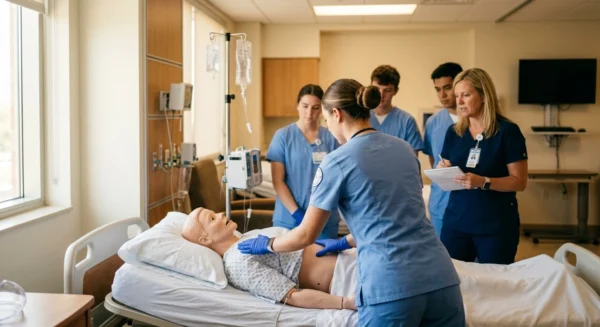
Simulation often includes preparation, a prebrief, a scenario, and a structured debrief. Faculty may assess clinical judgment, communication, teamwork, skills, or reflective learning. The exact criteria depend on the course design.
Before simulation, choose a quiet location where your group can review roles, assessments, interventions, and communication frameworks. Use a reservable room if the discussion requires normal speaking volume. Avoid taking over silent study areas.
After the scenario, use the debrief to examine why decisions worked or failed. Then turn the feedback into two or three actions for the next lab. This short follow-up session gives the debrief a practical purpose.
Do not record simulations or share details about classmates’ performance unless the program clearly permits it. State nursing boards set rules for using simulation in nursing education, including possible clinical substitutions. Review your program handbook and consult the Georgia Board of Nursing when needed.
A public café is not an appropriate place to replay restricted course recordings. It also creates privacy risks if students discuss identifiable details about classmates or simulation performance.
A practical study-spot routine for this week
Choose one demanding task, one routine task, and one group task from your current workload. Assign each task a setting before the week begins. Put complex work in your quietest location, portable review in a convenient setting, and group work in a reservable room.
- Check access: Confirm hours, identification requirements, parking, transit service, and reservation rules through the official website.
- Pack deliberately: Bring headphones, a charger, water, approved study materials, and a sweater for cold buildings.
- Set one outcome: Define what the session should produce, such as completed practice questions or a finished assignment section.
- Use focused blocks: Work for a set period, take a short break, and return to a specific next task.
- End with retrieval: Close the book and write or explain what you remember without looking at your notes.
- Prepare for next time: Record weak areas and pack the materials required for your next session.
Time near a textbook does not always produce learning. Nursing exams require students to recognize priorities, apply concepts, and make safe decisions. Active recall and course-aligned practice questions often provide more useful preparation than repeated rereading.
Follow your program’s academic integrity rules when using question banks, shared notes, study applications, and artificial intelligence tools. If the rules seem unclear, ask the instructor before using the resource.
How to make nursing group study useful
A productive nursing study group needs an agenda, a time limit, and prepared members. Reserve a room when possible so everyone can speak normally. Focus each meeting on one or two objectives.
For example, the group might compare assessment findings, explain a disease process, or practice a concise handoff. Assign topics before the meeting. Preparation prevents the session from becoming a shared rereading exercise.
Ask each person to teach a topic without reading directly from notes. Other members should question the explanation, identify missing safety points, and verify disputed information with assigned resources. Do not treat one confident student as the answer key. Confidence does not guarantee accuracy.
Keep patient information out of the discussion unless an instructor supplies a properly de-identified educational case. Do not share clinical stories, photos, room numbers, dates, or identifying details in group chats. If meetings repeatedly turn into social time, shorten them or study independently.
Troubleshooting common study-spot problems
Good lighting, fast internet, and comfortable chairs cannot fix every study problem. Often, the environment simply does not match the task. Identify the cause before adding more hours to your schedule.
- Problem: You keep falling behind. Likely cause: Travel, setup, or waiting for a seat consumes too much time. Fix: Complete routine review near home or campus. Save destination study sessions for demanding work.
- Problem: You cannot focus in a café. Likely cause: Music, conversations, foot traffic, and purchase pressure divide your attention. Fix: Use a campus or public library for complex material. Keep café sessions short.
- Problem: Group study wastes time. Likely cause: Members arrive without assigned topics or a clear endpoint. Fix: Share an agenda, assign teaching roles, and stop after completing the stated objectives.
- Problem: A difficult clinical experience leaves you too anxious to study. Likely cause: You may not understand the instructor’s expectations or evaluation method. Fix: Review the clinical rubric and request specific feedback. Contact the course coordinator through the school’s process if expectations remain unclear.
- Problem: You failed an exam despite long library sessions. Likely cause: Passive rereading created familiarity without retrieval or application. Fix: Meet with faculty and review your exam-analysis process if permitted. Replace some reading time with active recall and course-aligned questions.
- Problem: You feel burned out in every location. Likely cause: Workload, sleep, job hours, or accumulated stress may matter more than the setting. Fix: Reduce unnecessary travel and schedule recovery time. Contact faculty, advising, counseling, or your healthcare provider when you need support.
Do not force another study session when exhaustion follows an early clinical or night shift. Drowsy driving creates a serious safety risk. Arrange a ride, rest before driving when feasible, or use another safe transportation plan.
Speak with your healthcare provider about persistent sleep problems or medical treatment, including sleep medication. A study schedule should support safe practice, not compete with it.
Build a dependable rotation of Atlanta study spaces
The most useful nursing study spots Atlanta offers are accessible, quiet enough for the task, and suitable for protecting private information. They do not need trendy décor or round-the-clock hours. Build a three-location rotation that includes a campus space, a public library backup, and a convenient place near home.
Test each location with a real assignment before committing to it for the semester. Record the actual travel time, parking or transit friction, outlet access, closing announcements, and concentration level. Recheck official hours around holidays, exams, and semester breaks.
You do not need one perfect desk for every part of nursing school. You need fewer logistical barriers between you and focused work. A dependable location, a specific task, and an active study method will usually help more than another hour spent crossing Atlanta.