Nursing simulation labs are rapidly becoming a cornerstone of modern nursing education. As healthcare evolves, it’s critical that nursing instruction keeps pace—merging clinical theory, practical experience, and patient safety. These controlled, high-fidelity environments mirror real healthcare settings like emergency rooms and pediatric clinics. By utilizing lifelike manikins, cutting-edge medical equipment, and realistic patient scenarios, nursing simulation labs empower students to build essential skills in communication, critical thinking, and hands-on procedures before entering real clinical environments.
What Are Nursing Simulation Labs?
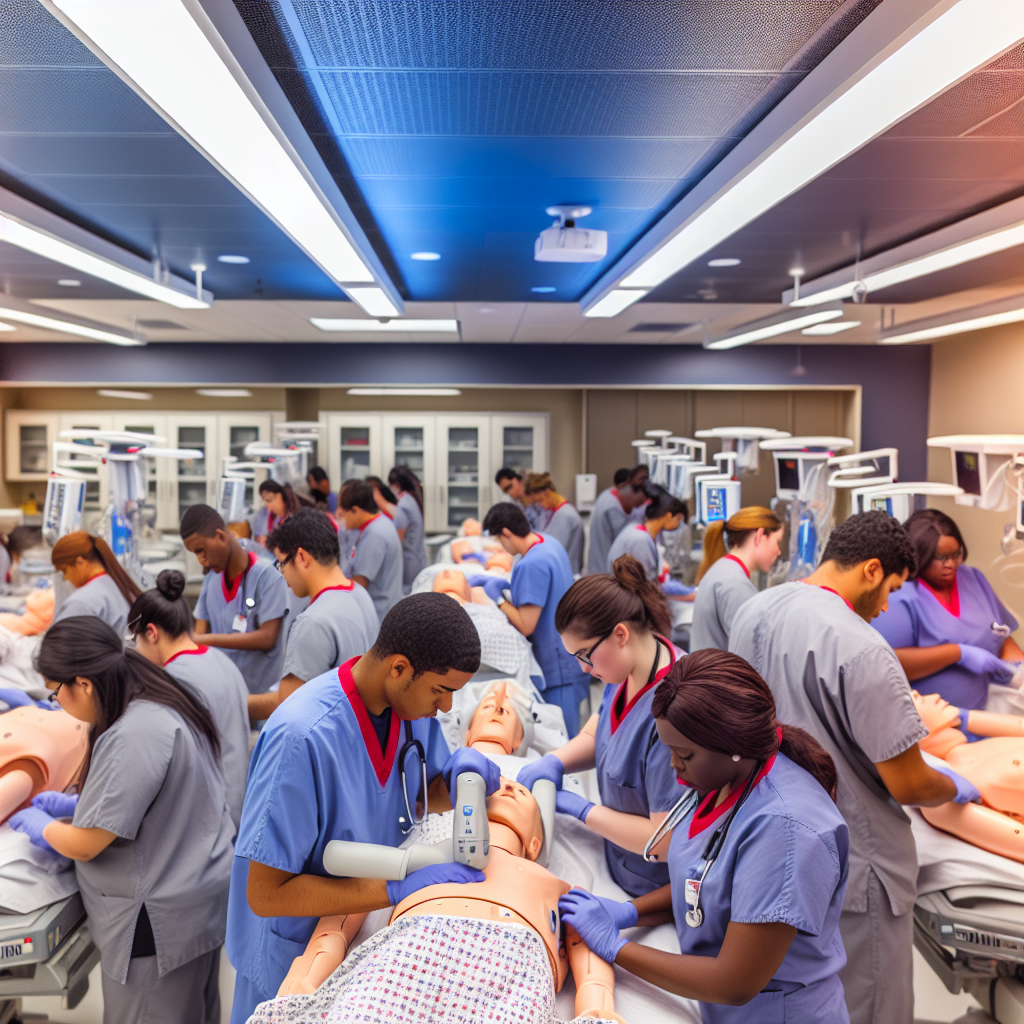
Nursing simulation labs are state-of-the-art educational spaces designed to imitate real clinical settings through technology and scenario-based learning. Equipped with medical-grade tools, responsive patient simulators, and advanced software, these labs help students translate theoretical knowledge into hands-on experience. From cardiac arrests to psychiatric evaluations, students engage in a wide range of simulated scenarios that sharpen both hard and soft skills in a safe, no-risk environment.
At top nursing schools such as Johns Hopkins University and the University of Pennsylvania, simulation labs span mock hospital wings, including ICU beds, nurse stations, and family consultation areas. These immersive setups foster realism and prepare students for high-pressure patient interactions.
Many labs feature high-fidelity manikins like Laerdal’s SimMan and Gaumard’s Victoria, which can breathe, blink, bleed, and even deliver babies. Instructors control these simulators in real time, adjusting conditions to reflect clinical decisions made by the students. Role-playing with standardized patients adds another dimension, helping students refine empathy, cultural sensitivity, and communication techniques—core components of holistic nursing care.
Why Nursing Simulation Labs Matter in Nursing Education
One major advantage of nursing simulation labs is the opportunity to learn from mistakes without endangering real patients. In high-acuity healthcare environments where seconds count, simulation builds clinical confidence and minimizes error. According to the National Council of State Boards of Nursing (NCSBN), up to 50% of clinical hours can be effectively replaced with simulation without sacrificing educational outcomes.
Because real-world clinical rotations often vary in case exposure, simulation ensures that every student has equal access to diverse, complex scenarios. Whether replicating sepsis management or pediatric asthma treatment, nursing simulation labs provide standardized experiences that enhance diagnostic reasoning and interdisciplinary collaboration.
Additionally, simulation training has been shown to reduce performance anxiety. Repeated exposure to high-stakes situations like trauma codes and childbirth fosters emotional resilience. Students not only master technical skills but also learn to navigate stress calmly—a trait highly valued in real clinical settings.
Top Nursing Simulation Labs in the United States
Across the U.S., nursing programs are investing in simulation as a cornerstone of training. In Minnesota, the University of Minnesota School of Nursing offers a 10,000-square-foot Health Sciences Simulation Center, complete with realistic patient workflows and faculty-led debriefings.
In California, UCLA’s Simulation Center includes trauma bays and simulated operating rooms. Students perform lifesaving procedures under real-time instructor observation, gaining immediate performance feedback through video analysis.
University of Central Florida (UCF) College of Nursing houses the STIM Center, which simulates pediatric, maternal, and adult care environments. Their curriculum includes clinical judgment assessments and extensive debriefing sessions to improve student outcomes.
Even smaller institutions are raising the bar. Northern Arizona University offers outdoor disaster simulations, teaching students to manage care in wilderness or resource-limited emergencies. These exercises are tailored to Arizona’s unique landscape and make use of community partnerships for realistic experiences.
Key Features That Make Nursing Simulation Labs So Effective
Realistic, repeatable practice is at the heart of nursing simulation labs. One key feature is time control—students can pause or “rewind” a scenario to attempt different approaches. This leads to deeper understanding and more effective skill development.
Modern labs also mirror authentic clinical technologies. From EHR systems like Epic and Cerner to telemetry monitors and defibrillators, students get hands-on training with tools they’ll encounter in hospitals. This technological fluency boosts both confidence and competence.
Many labs include one-way observation rooms and audio feeds. Faculty can monitor performance without disrupting the session and offer targeted feedback during video-assisted debriefs. This method has been proven to increase self-awareness and reinforce learning.
Instructors often use branching scenarios that change based on student choices. For example, missing a medication dose could trigger a simulated rapid deterioration in the patient’s condition. These outcome-based exercises help students grasp the real-world consequences of clinical decisions.
Tips for Students Using Nursing Simulation Labs Effectively
To maximize the benefits of simulation, students should approach every session with professionalism. Wear appropriate scrubs, bring your stethoscope, and communicate respectfully—just as in a real clinical setting. Adopting this mindset enhances real-world readiness.
Students should also use the EHR systems provided to practice accurate documentation. Familiarity with electronic charting accelerates future workflows and improves the quality of patient care documentation during clinical rotations and after graduation.
Equally important is the debrief. Reflective conversations following simulations are where much of the learning occurs. Whether you excelled or stumbled during the exercise, discussing your experience helps solidify takeaways. Many programs support this with simulation journals or digital logs to track growth over time.
How Nursing Simulation Labs Advance Patient Safety and Career Readiness
Beyond student development, nursing simulation labs contribute to broader patient safety goals. The Institute for Healthcare Improvement (IHI) endorses simulation for training in teamwork, error prevention, and effective communication—all of which reduce mishaps in clinical environments.
Graduates from robust simulation programs often outperform peers in critical care, obstetrics, and emergency nursing due to their enhanced readiness. Hospitals increasingly prefer nurses who are simulation-trained, recognizing their ability to act quickly, think critically, and communicate clearly under pressure.
Simulation also aids in exam preparedness. Many labs incorporate NCLEX-style clinical judgment models, helping students refine decision-making in timed, high-stakes scenarios. The confidence gained through simulation frequently translates into improved NCLEX pass rates and stronger career starts.
Some programs now integrate telehealth simulations, reflecting the healthcare sector’s rapid shift toward virtual care. Training in remote assessments and AI-assisted triage prepares nurses for roles in future-focused healthcare delivery models.
How Simulation Labs Are Transforming the Future of Nursing
The landscape of nursing education is transforming—and nursing simulation labs are leading that change. As the demand for adaptive, well-prepared nurses grows, these labs offer a proactive solution: immersive, hands-on learning tailored to real-world needs.
Whether you’re selecting a nursing program, mentoring a future nurse, or designing a curriculum, understanding the value of simulation labs is key. They blend practice with reflection, technology with empathy, and theory with action—creating a new standard for how nurses are trained to care.